The 5 Voice AI Pitfalls Restaurant Operators Can’t Afford to Ignore
The 5 Voice AI Pitfalls Restaurant Operators Can’t Afford to Ignore
There's a scene I keep thinking about from this past week.
A restaurant GM I know sent me a text message at 11 p.m. on a Friday. She sounded exhausted. "We just had a guest show up for pickup at 8pm," she said. "Our AI told them their order would be ready. But the deep dish pizza takes 45 minutes to bake. We won’t be ready for another half an hour…."
There was a certain sound to her voice, the sound of someone who wanted technology to make things easier, not harder. And it's becoming more common as voice AI spreads across the industry.
When It Works, It Really Works
Voice AI is having a real moment in restaurants. The promise is genuine: fewer missed calls, higher order capture, relief during the rush hours. At Palona, we've seen what's possible when the system is built right, staff who can finally focus on the guests in front of them, not the phone ringing behind them.
But here's the part that doesn't get talked about enough.
Voice AI is not plug-and-play infrastructure. It's living, breathing technology sitting at the center of your guest experience. And when it's deployed without understanding the risks, it can create problems that show up exactly where you don't want them.
If you've felt that tension, the gap between what you were promised and what actually happens on a busy Thursday night, you're not alone.
The 5 Pitfalls No One Warns You About
1. Payment Security and PCI Compliance
This is the most serious pitfall, and the one every operator should care about. Some voice and text AI systems ask guests to read out their credit card numbers to complete an order.
Think about it this way: it’s the equivalent of a cashier asking to process payments through their personal Venmo. You wouldn’t allow that in your restaurant, so why allow it in your AI?
Best practices are clear:
Voice AI should never collect raw card numbers
Payments should flow through secure, tokenized methods like Apple Pay or PayPal
2. AI “Upselling” That Hurts Sales
The first operational mistake is assuming upselling always helps. Many voice AI systems are tuned to aggressively push add-ons and upgrades. On paper, it sounds great. In practice, it can confuse guests mid-order, create ticket errors, and make people hang up.
A human server knows when to read the room. An AI doesn’t, unless it’s explicitly designed to.
Upselling should feel helpful, not like being cornered by a chatbot that won’t take “no” for an answer.
3. Pickup and Delivery Coordination Breakdowns
Then there's timing, which sounds simple until you factor in real kitchen capacity, prep-time variance, third-party drivers, and whether it’s 6 p.m. on a Saturday or 2 p.m. on a Tuesday. When AI gets this wrong, guests arrive too early, drivers show up late, and staff absorb the fallout.
This is one of the fastest ways to lose trust in automation.
4. Holiday and Special Hours: When AI Fails at the Worst Time
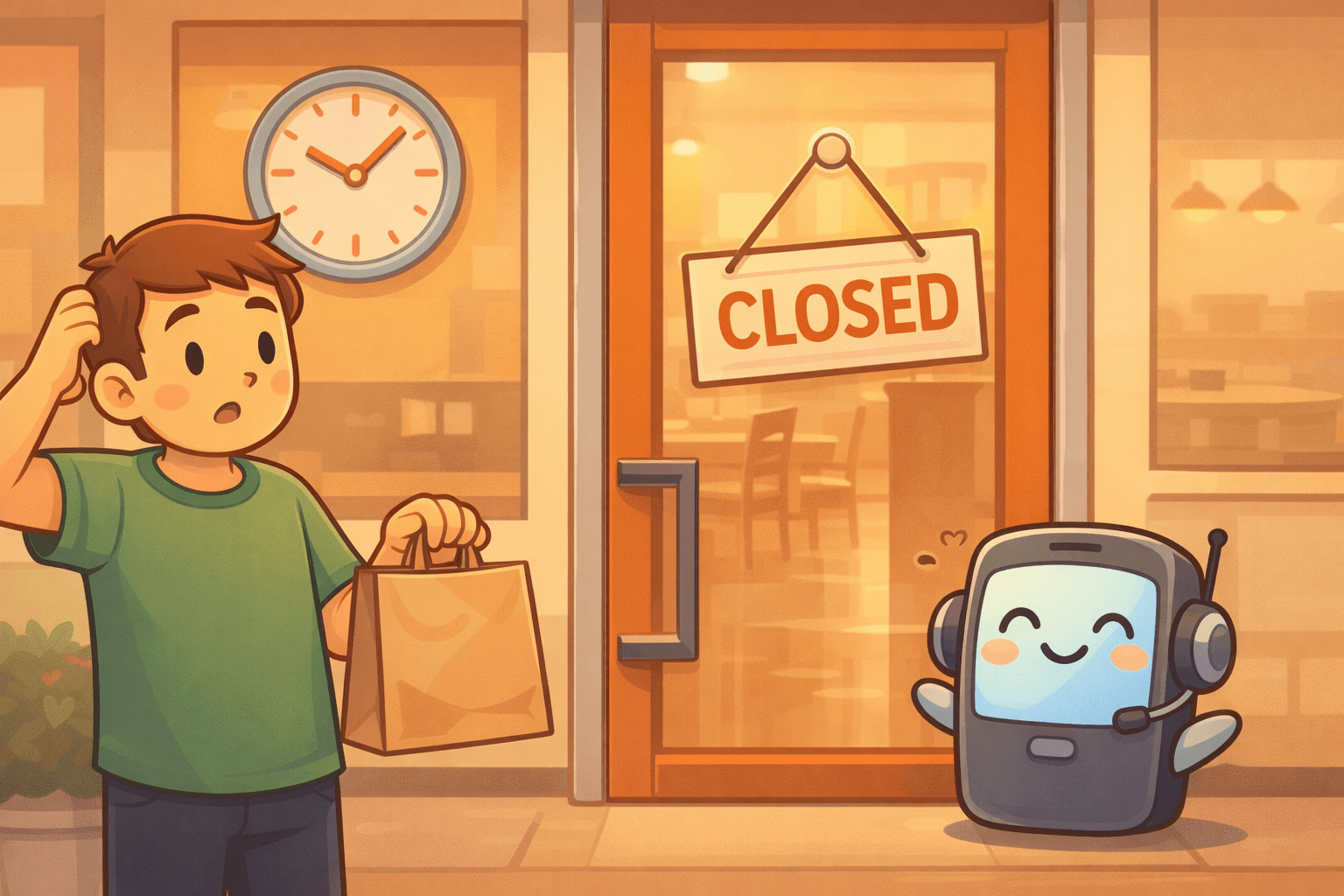
Holidays are where it gets truly ironic. The days you get the most calls are also the days your hours change. If your AI isn't synced with real-time schedules, it will confidently tell guests you're open when you're not.
Confidence without correctness is dangerous.
5.Voice AI Is Always Moving. Forward or Backward?
Finally, there's drift. Voice AI is not static. Once deployed, it’s always drifting toward improvement or decay. Menus change. Promotions evolve. Guest language shifts. If the system doesn’t adapt, small mismatches quietly stack up.
Voice AI isn’t a “set it and forget it” tool. It’s part of your guest experience, and it needs to earn trust every day.
The Operator’s Checklist (Before You Roll It Out)
Verify PCI compliance: The AI should never collect card numbers.
Tame upselling: Upsells should be relevant, limited, and effortless for guests to decline.
Reality-check timing: Order timing must reflect actual kitchen capacity, peak periods, and delivery logistics.
Sync hours automatically: Holiday and special hours should update in real time to avoid confidently wrong answers.
Plan for upkeep: Voice AI needs ongoing updates so menus, promos, and language don’t drift.
The Payoff Is Real, If You Build It Right
Despite all of this, I remain deeply optimistic about voice AI in restaurants.
When it's built responsibly and deployed thoughtfully, the ROI is real. The best operators treat it like a living system, not a set-it-and-forget-it tool.
If you're navigating this right now and want to talk through what to look for, I'm happy to chat. This stuff matters too much to get wrong.